Simpson County, Mississippi
A Proud Part of the Mississippi GenWeb!
Contact Us:
State Coordinator: Jeff Kemp
County Coordinator: Gerry Westmoreland
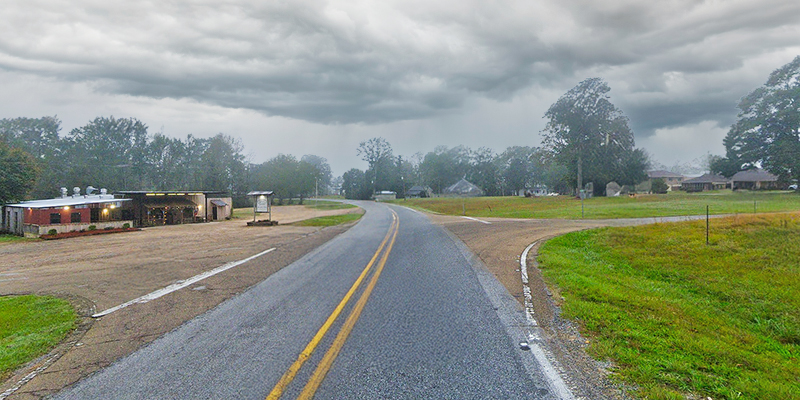
Shivers, Mississippi is a small rural community in Simpson County, rooted in agriculture, timber, and the tight-knit social fabric that has long defined the Pine Belt. Like many unincorporated places in South Mississippi, Shivers never sought the spotlight—but it quietly did the work of feeding families, raising children, and anchoring generations.
The land that would become Simpson County was originally home to the Choctaw people, whose presence shaped the region long before American settlement. Following treaty removals in the early 19th century, settlers moved into the area, drawn by fertile soil, plentiful timber, and reliable water sources.
By the mid-1800s, scattered farms and homesteads dotted the countryside around present-day Shivers. Families cleared land, built log homes, and relied on subsistence farming supplemented by cotton as a cash crop. These early settlers laid the groundwork for a community defined more by relationships than by formal boundaries.
Shivers developed as a farm-centered community, supporting nearby cotton fields, corn patches, gardens, and livestock operations. Timber also played an important role. Pine forests provided lumber for homes, barns, and fencing, and later fed regional sawmills that helped power Simpson County’s economy.
Unlike towns that grew up around rail depots, Shivers functioned primarily as a local neighborhood hub—a place identified by families, churches, and roads rather than by incorporated limits or commercial districts.
As with many rural Mississippi communities, churches were central to life in Shivers. They served not only as places of worship but as gathering spaces for revivals, funerals, homecomings, and social events. Churchyards and nearby cemeteries preserve the names of founding families and later generations, making the area especially valuable for genealogical research.
Education for children in the Shivers area was historically provided through small local schools or nearby community schools, often within walking or wagon distance, reinforcing strong ties among neighboring families.
During the early and mid-20th century, Shivers experienced gradual change rather than sharp decline. Agricultural mechanization reduced the number of farm laborers, and improved roads made it easier for residents to travel to larger towns such as Mendenhall for supplies, employment, and services.
Despite these changes, Shivers remained inhabited. Families stayed rooted to land passed down through generations, maintaining the area’s rural character even as the broader economy shifted.
Today, Shivers remains an unincorporated rural community, defined more by its people than by maps. Farms, homes, churches, and cemeteries continue to mark the landscape, reflecting a way of life that has endured for well over a century.
Shivers represents a common—but important—Mississippi story: settlement after Choctaw removal, survival through agriculture and timber, strong church and family networks, and continuity without incorporation. It’s the kind of place that rarely shows up in headlines but appears again and again in census records, land deeds, obituaries, and family memories. And for historians and genealogists alike, those are often the places where the real stories live—quietly, persistently, and without ever asking for attention.
Shivers is located in Simpson County at the intersection of State Hwy 43 and Shivers Road about 34 miles south-southeast of Jackson and 16 miles west of Magee.