Lawrence County, Mississippi
A Proud Part of the Mississippi GenWeb!
Contact Us:
State Coordinator: Jeff Kemp
County Coordinator: Gerry Westmoreland
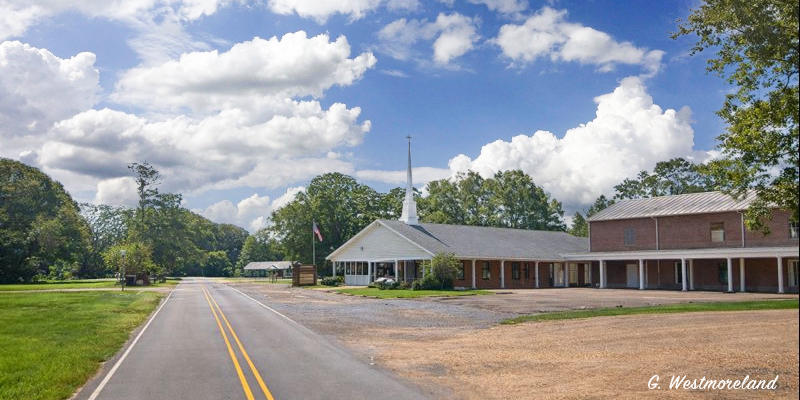
Topeka, an unincorporated community in Lawrence County, Mississippi, developed during the late 1800s as a small but active rural settlement centered around farming, timber, and the arrival of the railroad. Though never a large town, Topeka played an important role in connecting northern Lawrence County’s scattered farms with regional markets and neighboring communities such as Monticello, Silver Creek, Oak Vale, and Arm. Its history reflects the broader patterns of settlement, transportation, and agricultural life that shaped southern Mississippi.
Early Settlement
Before Topeka became a named community, the area was settled by farming families moving into Lawrence County during the early and mid-19th century. The land consisted of gently rolling hills, pine forests, and creeks ideal for small farms, cattle raising, and—later—commercial timber production. Early families often lived miles apart, attending churches and trading at crossroads communities long before any formal town developed.
By the late 1800s, the scattered homesteads around present-day Topeka began to consolidate into a recognizable settlement, particularly as the timber boom expanded in southern Mississippi.
The Railroad and the Rise of the Community
The most influential factor in Topeka’s growth was the Gulf & Ship Island Railroad, later part of the Illinois Central system. As rail lines extended through Lawrence County during the 1890s and early 1900s, Topeka emerged as a small stop along the route.
Rail access enabled local farmers and sawmill operators to ship: Timber and lumber; Turpentine and naval stores; Cotton and livestock; Produce and goods from small family farms.
With a railroad depot came a cluster of essential services—stores, a post office, and homes built closer to the tracks. The name “Topeka” was adopted around this time, possibly inspired by the Kansas city, following a common Southern practice of borrowing Western place names during the late 19th century.
Post Office and Early Businesses
A post office was established in Topeka in 1903, marking the community’s peak period of activity. Small general stores, a depot platform, and various farm-related businesses served the area’s families. Like much of rural Mississippi, these stores were places where people gathered, caught up on news, and exchanged goods through barter or credit.
The post office operated until 1914, after which mail service was rerouted to larger nearby towns. The closing of small post offices was common as rail service changed and automobile travel increased.
Churches, Schools, and Community Life
Churches and schools were central to Topeka’s identity. Community members often attended services at nearby congregations such as Shiloh, Nola, or Arm, depending on location. A small school served local children, part of Lawrence County’s early rural school system, which typically featured one- or two-room buildings overseen by a single teacher.
School and church events—picnics, singings, fundraisers, and revivals—were the heart of community life. Many of today’s families with roots in northern Lawrence County trace their ancestry through these shared institutions.
Agriculture, Timber, and Everyday Life
The economy of Topeka was rooted in small family farms, with cotton, corn, peas, and sweet potatoes forming the core of local agriculture. Hogs, cattle, and chickens rounded out household income and food supply.
By the early 20th century, timber became the dominant industry, and sawmills operated in or near Topeka as loggers cut and shipped vast stands of pine. Many residents worked in the woods, on logging trains, or in nearby mills. The rhythm of life was tied to the land—planting seasons, harvests, and the timber cut shaped the year.
Decline of the Depot and Shifts in the Mid-20th Century
As automobiles and better roads reduced dependence on the railroad, Topeka’s depot and businesses gradually faded. By mid-century, Topeka had transitioned from a small rail community into a quiet rural settlement. Families still farmed, timber work continued, and the area retained its peaceful, close-knit nature, but most commercial activity had shifted to larger towns such as Monticello, Silver Creek, and Brookhaven.
The landscape around Topeka today remains largely rural, with pine plantations, family homes, and traces of old roads and rail lines hinting at earlier times.
Topeka Today
In the 21st century, Topeka is a small unincorporated community known for its rural charm, its deep family roots, and the long continuity of the land and people. It no longer has the depot or stores that once gave it structure, but many descendants of the early families still live nearby. The community’s history is preserved through family stories, church records, cemetery inscriptions, and the surviving traces of the railroad era that once brought life and movement to the countryside.